The problems teams solve with EA Composer
Most teams adopt EA Composer to answer one or two of these questions — then use it for more. Start with the problem that sounds like yours.
Application Portfolio Rationalization
Which applications overlap or are redundant — and where can we consolidate and cut cost?
A single, current view of every application, its business fit and its cost — so you can retire duplication and simplify the estate.
Explore this use case →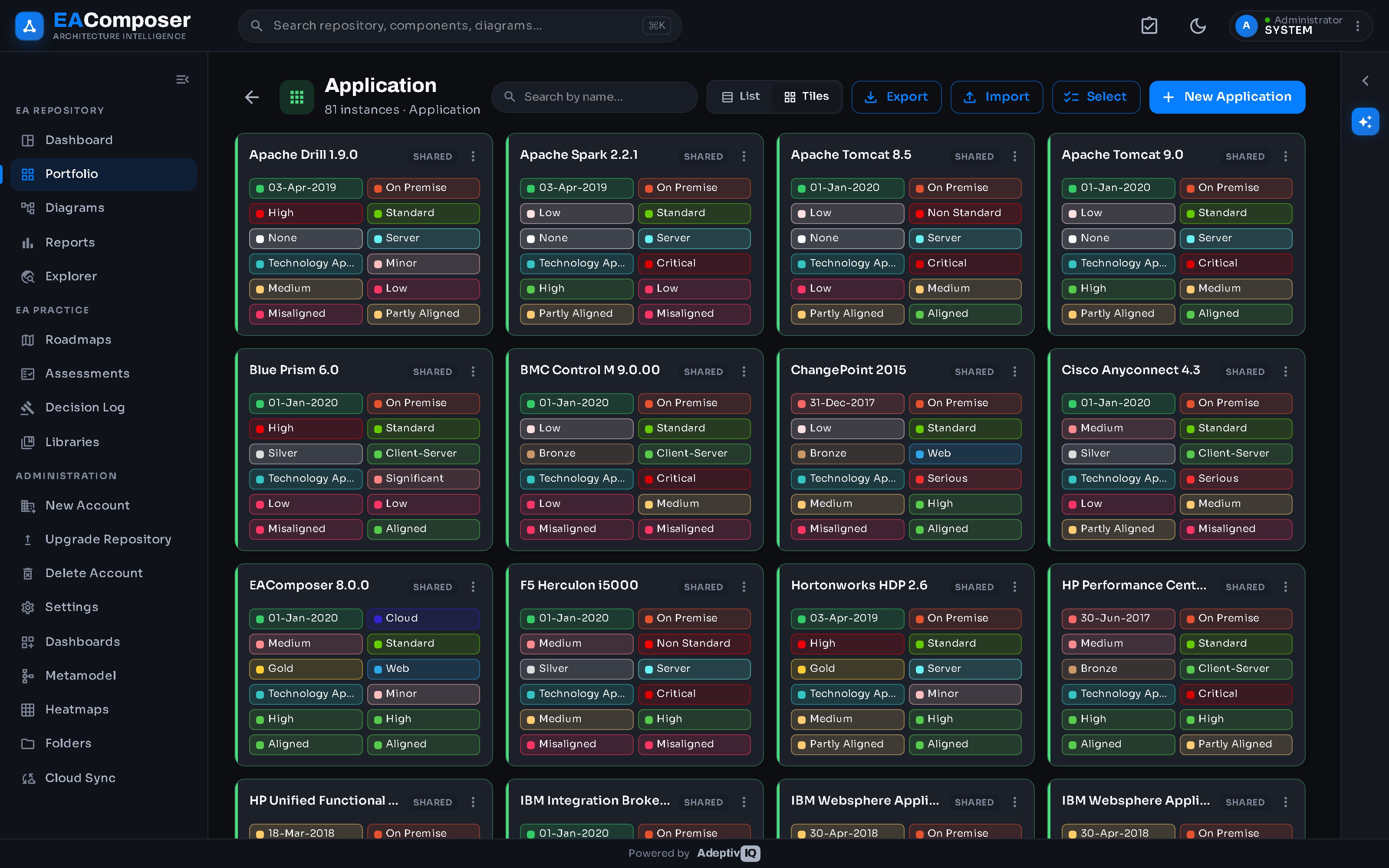
Technology Risk & Lifecycle
What is end-of-life, unsupported, or a security exposure we should be acting on now?
Heatmap lifecycle, support and risk across the estate, so upgrades and remediation are planned before they become incidents.
Explore this use case →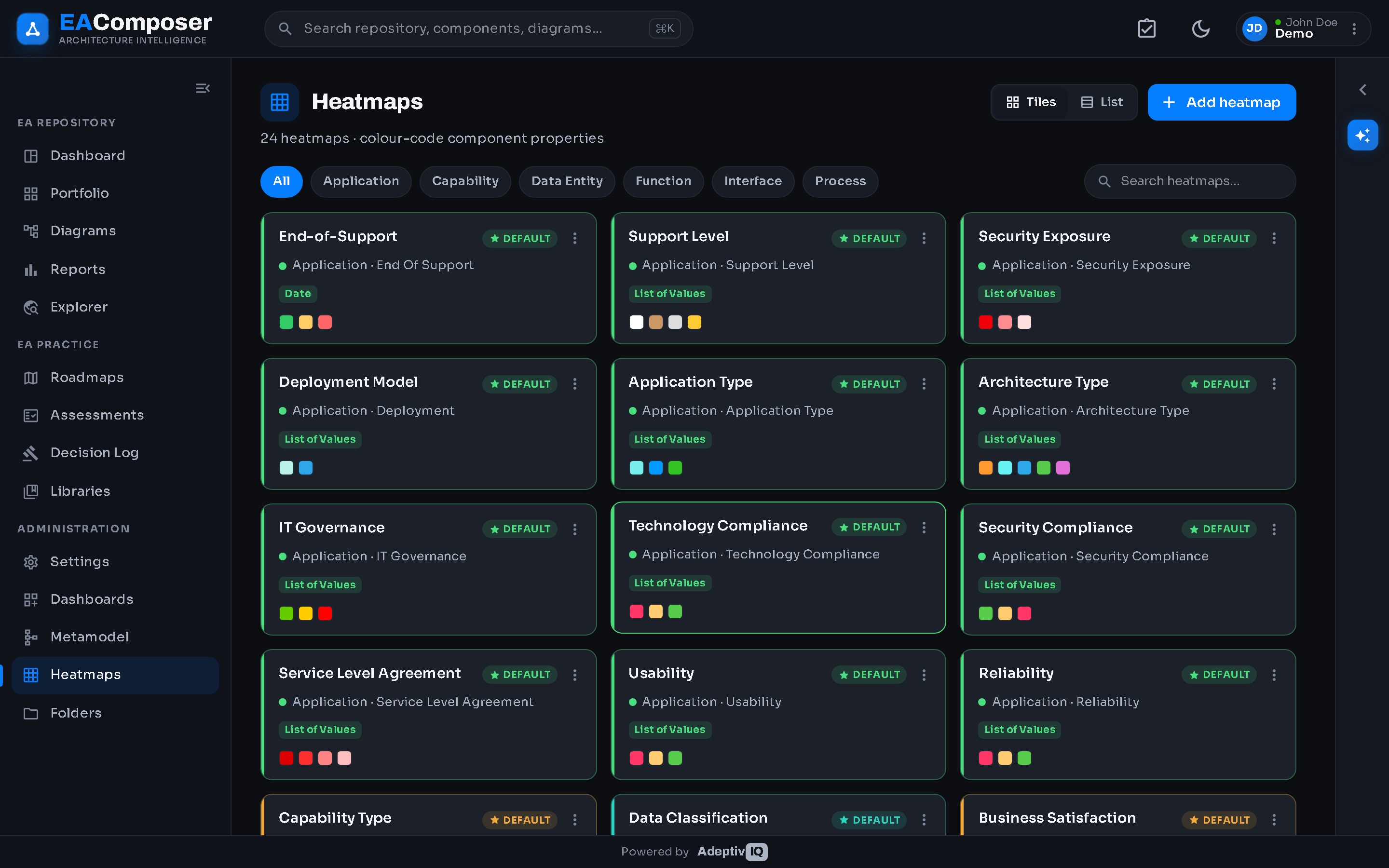
Cloud & Integration Architecture
How do our systems actually connect across cloud, SaaS and on-prem — and where are the dependencies?
Design and document hybrid and integration architectures as living, editable diagrams tied to the repository — not stale drawings.
Explore this use case →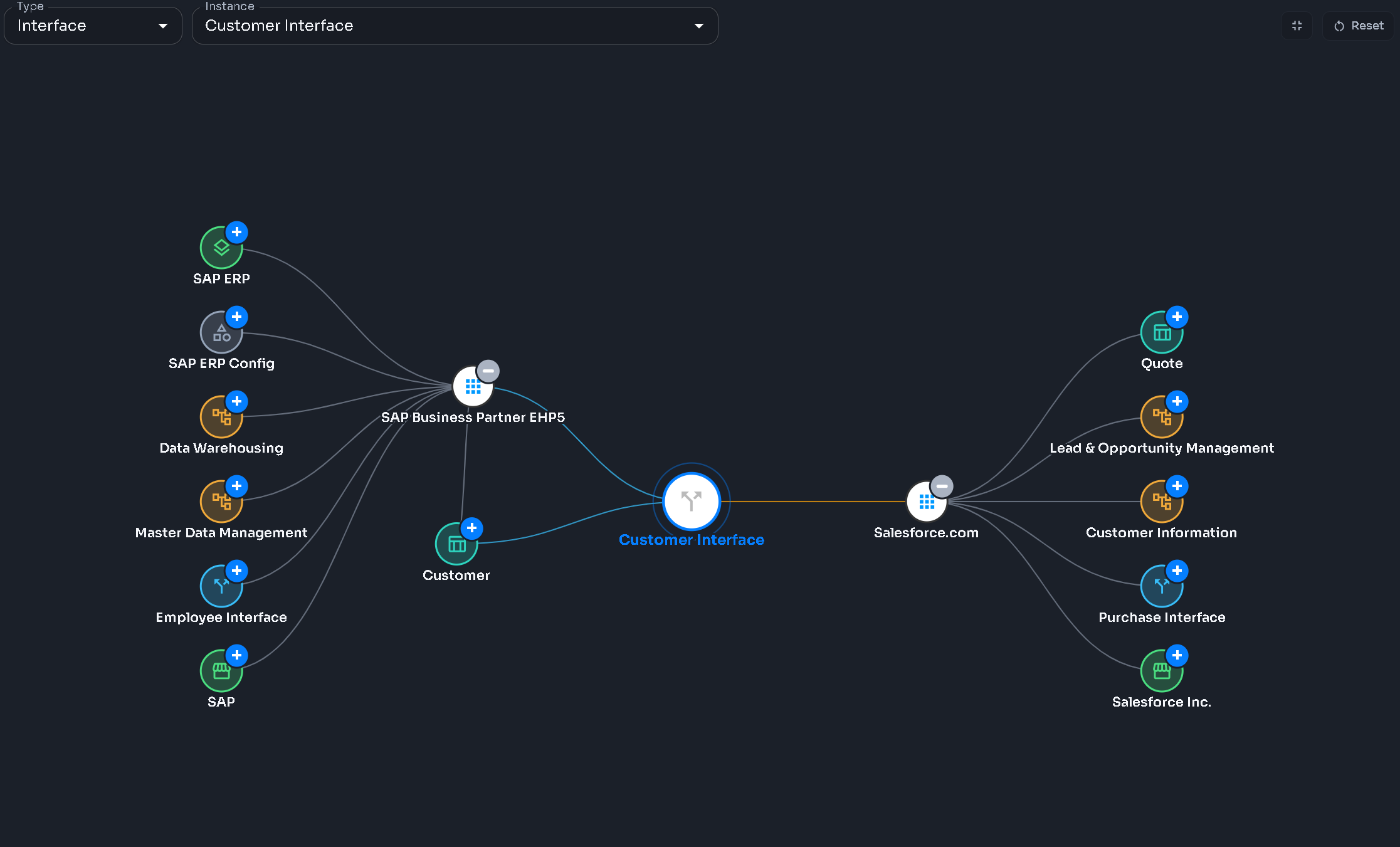
Governance & Compliance
Are our initiatives aligned to our standards and target architecture — and can we evidence it?
Assess projects against standards and the target state, with a decision log that holds up to audit.
Explore this use case →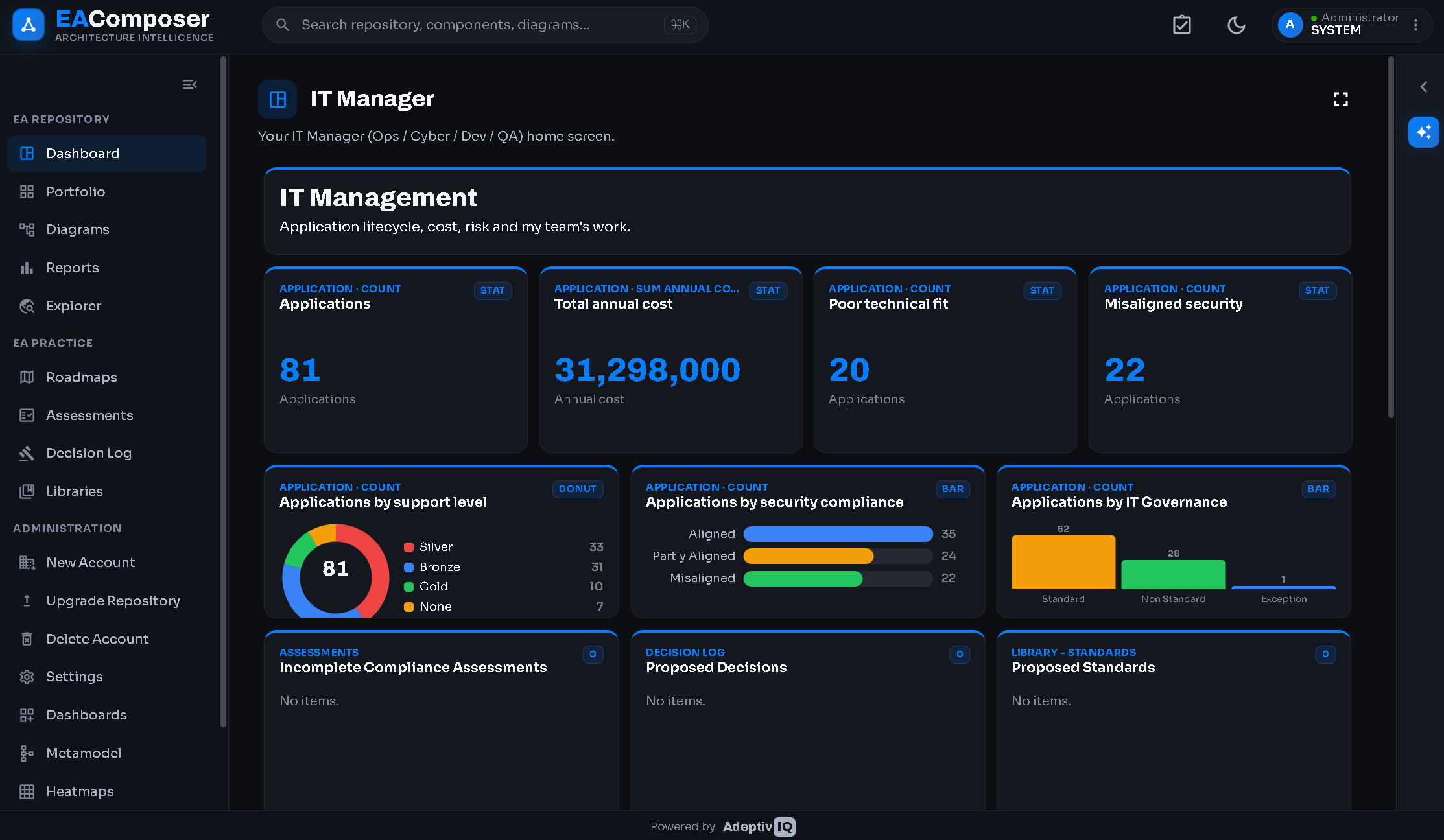
Capability-Based Investment
Which capabilities are under-supported or over-invested — and where should the next dollar go?
Map applications and spend onto a capability model to direct investment where it moves the business.
Explore this use case →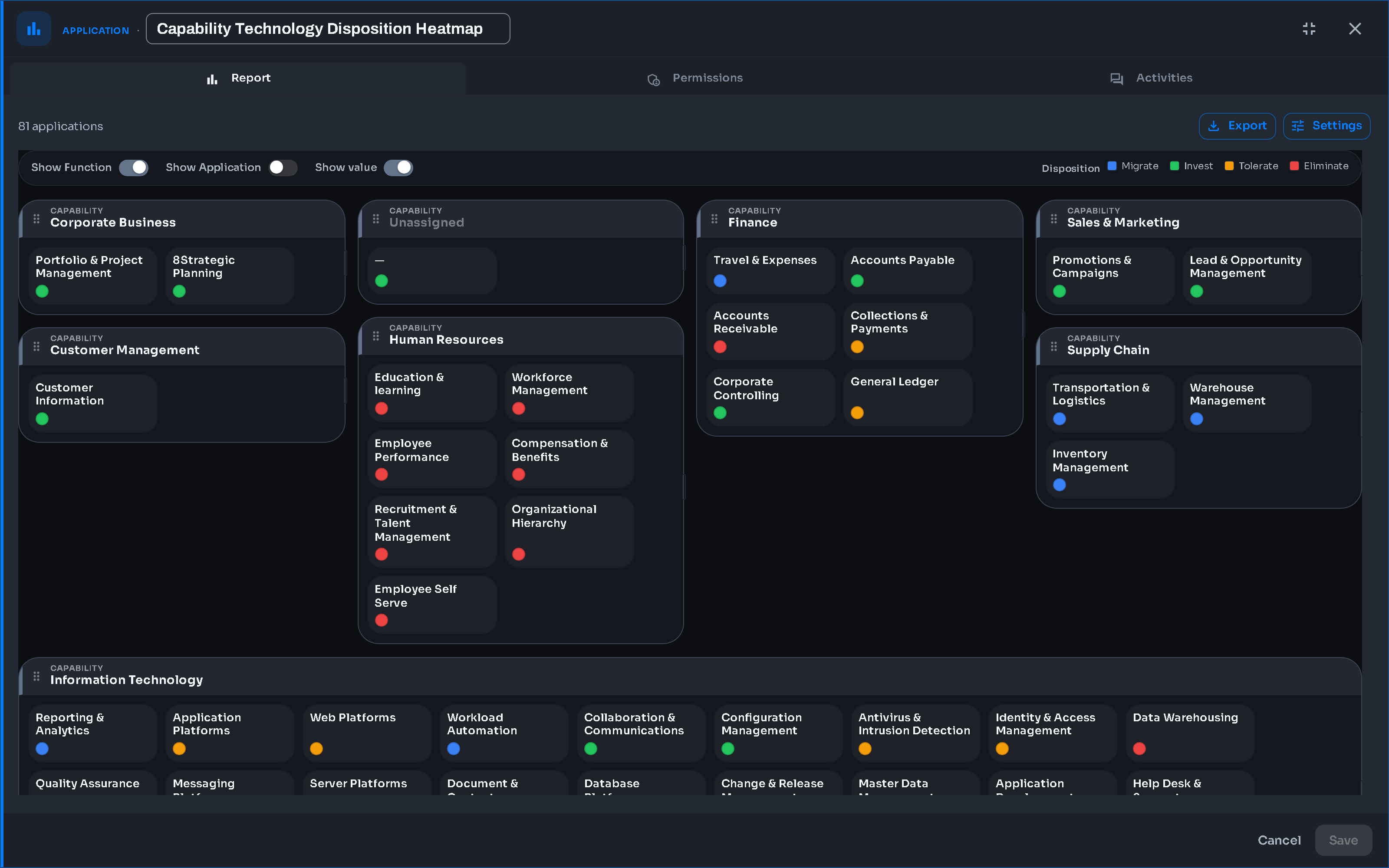
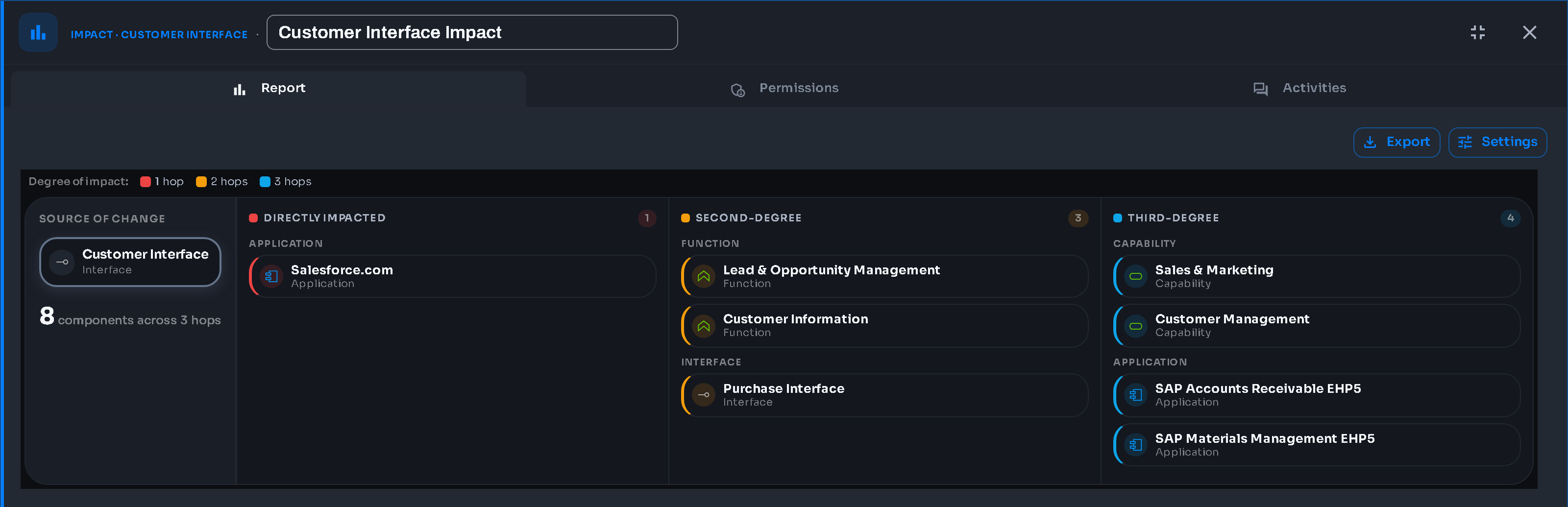
Impact Analysis
If we change or retire this, what else is affected — and who needs to know?
Trace dependencies in one click to see the blast radius of any change before you make it.
Explore this use case →